Summer is one of the few times the calendar actually slows down—at least enough to catch up on what gets ignored the rest of the year. That makes it the perfect window to do the unglamorous but important work of making sure people can find you online.
Not just on Google. Everywhere.
Search hasn’t disappeared. It’s just no longer the only place people look.
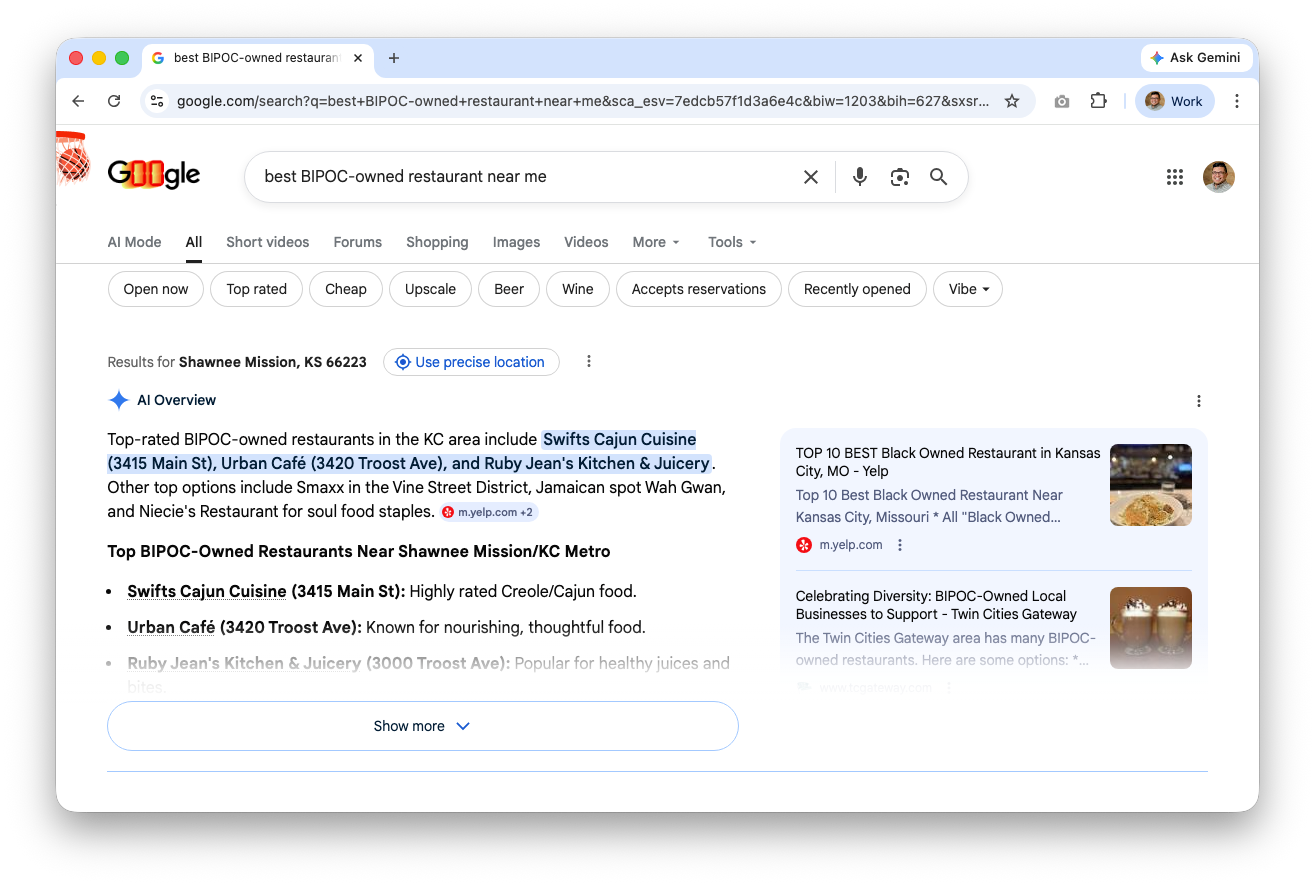
Because here’s what’s changed: when someone types “best BIPOC-owned restaurant near me” into Google today, they don’t always get a list of links. They get an AI-generated answer that names specific businesses by name — and those businesses didn’t pay for that placement. They earned it by being well-represented across the web. The same thing happens when someone asks ChatGPT to recommend a CPA, a private school, or a nonprofit housing program in their city.
If your organization isn’t showing up in those answers, this summer is your chance to fix that. Here are five things you can do right now.
1. Audit your Google Business Profile — and actually update it
This is the single highest-leverage task on the list, and the one most organizations have let go stale. Your Google Business Profile (the listing that appears in Maps and in local search results) feeds information directly into Google’s AI Overviews.
Check that your name, address, phone number, hours, and description are accurate. Upload recent photos. Make sure your category and services reflect what you actually do. If you haven’t claimed your profile yet, do that first.
This takes an afternoon, and the impact is immediate.
2. Add an FAQ section to your most important page
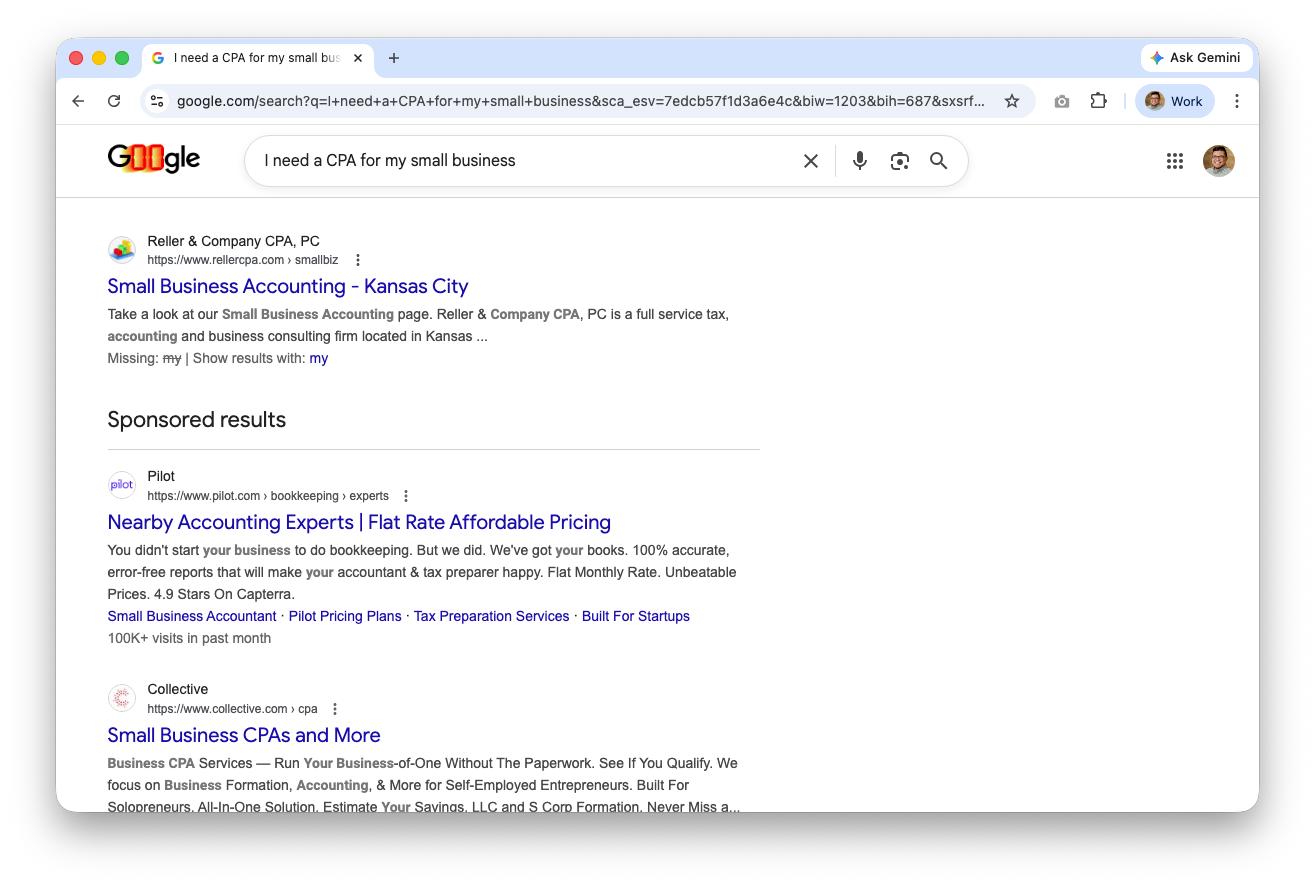
When someone Googles “I need a CPA for my small business,” they’re often shown a direct answer, pulled from a site that explained it clearly. Not a list of links. Not an ad. An answer. That’s what you’re trying to show up in.
Pick the one page on your site that matters most — your admissions page, your services page, your donate page — and add five to seven questions your audience actually asks. Write the answers in plain, direct sentences. “Do you offer payment plans?” “What ages do you serve?” “How do I apply?” This content is also what voice assistants pull when someone asks Siri or Alexa a question out loud.
3. Make sure your name and description say the same thing everywhere
AI tools like ChatGPT build their understanding of your organization from dozens of sources: your website, Yelp, Google, industry directories, local news mentions, Charity Navigator if you’re a nonprofit, and Niche.com if you’re a school. When those sources are inconsistent — your name is abbreviated in one place, your address is outdated in another, your description doesn’t match — AI treats you as less reliable and is less likely to surface you.
Spend an hour searching your organization’s name and auditing what comes up. Fix the inconsistencies. This is the unglamorous core of what’s called Generative Engine Optimization, and it’s something a volunteer or intern can help with.
4. Publish one piece of original content with a real point of view
This is the one that feels hardest, and it’s one of the few things AI systems actually prioritize. AI systems favor sources that offer something distinct — a perspective, a local data point, a specific outcome. A blog post that says “Here’s what we learned from serving 200 families in the KC metro last year” is far more citable than a page that says “We are a community-focused nonprofit dedicated to serving families.”
It doesn’t have to be long. Five hundred words with a genuine insight, a local stat, or a behind-the-scenes look at how you do what you do is enough. Publish it before fall, and it’ll start building credibility for your organization across every surface — traditional search, AI Overviews, and tools like ChatGPT and Perplexity.
5. Check whether you’re actually showing up — on Google and in AI tools
This sounds obvious, but most organizations haven’t done it recently, and the results are often surprising.
Open an incognito window and search for what your audience would search for — not your organization’s name, but the problem they’re trying to solve. “After-school programs in [your city].” “Nonprofits helping with rent assistance near me.” “Best K-8 school in [your neighborhood].” See what comes up in the AI Overview at the top of the page, and whether you’re in it.
Then open ChatGPT and ask the same question. See who gets named. That’s the new landscape — and knowing where you stand is the first step to improving it.
If you want to go deeper, two free tools are worth bookmarking. Answer the Public shows you the actual questions people are asking. Use it for your FAQ section. Google Search Console shows what people are already searching to find you, and where you’re showing up, but not getting clicks.
None of these requires a big budget. They require a few focused hours and someone willing to do the work before the fall rush begins. The organizations that show up consistently across Google, AI Overviews, and tools like ChatGPT aren’t doing anything magical. They’ve just made it easy for every system — human and AI — to understand who they are and what they do.
That’s a summer project worth doing.